When selecting white marble for interiors, the standout marbles are certainly Carrara, Calacatta, and Statuario. While they all come from the storied quarries of the Apuan Alps in the Carrara region of Tuscany, each type of marble has a distinct personality — and choosing the right one can have a major impact on both aesthetics and budget.
First, Carrara marble is perhaps the most familiar and accessible of the three. Quarried from the vast network of marble sites around Carrara, it often carries a soft white to pale-gray background with delicate, feathery gray veining. Its more muted pattern gives it an understated elegance, making it a favorite for large surfaces like flooring or classic bathroom vanities. Because Carrara is quarried in relatively large quantities, it is also the most budget-friendly option: depending on grade and supplier, material prices (without installation) often range from around $40–$80 per square foot, though higher-end slabs can go up to or even beyond $120.
In contrast, Calacatta marble is the flamboyant, statement-making cousin. Also coming from the Carrara region, but from rarer, more exclusive quarry zones, Calacatta features a much brighter, whiter background and large, bold veins in grey, gold or even beige (called Calacatta Oro). That dramatic veining makes Calacatta highly prized for high-impact design: think kitchen islands, fireplace surrounds, or feature walls. But that rarity comes at a cost. True, Italian Calacatta slabs typically run from $175–$200 or more per square foot even for the raw material, per current market estimates.
Then there’s Statuario marble, which occupies a special place in the pantheon of luxurious Italian stone. Extracted from quarries in the Apuan Alps (especially near Seravezza), Statuario is prized for its luminous, near-pure white base and its fine, yet striking, grey veining — sometimes referred to as “venato” when the veins are bolder. This marble has traditionally been used for statuary (hence its name) because of its fine crystal structure and ability to take a high polish. Because of its relative rarity and the beauty of its veining, Statuario tends to fall in a high-end price bracket: common slab prices are often cited in the $50–$125 per square foot range, though premium or particularly rare varieties may go higher.
From a maintenance perspective, all three marbles demand care. Like all marbles, they are porous, and vulnerable to etching from acidic substances, so sealing is non-negotiable. For both Carrara and Calacatta, stone fabricators generally recommend resealing every six to twelve months, especially in heavily used areas like kitchens. Cleaning should be done with a pH-neutral stone cleaner or mild soap and water; avoid any abrasive or acidic cleaners. For Statuario, the same rules apply — but many over time prefer to use honed rather than polished finishes, as the matte surface can mask wear and etching more gracefully while still delivering its signature refined look.
In short: Carrara is your elegant workhorse — versatile, soft, and relatively affordable. Calacatta is for the design risk-takers, those who want drama and a bold focal point. Statuario offers a rare balance of purity and sophistication, combining a crisp white ground with refined veining in a way that feels quietly luxurious. Your choice will ultimately depend on your design goals, your budget, and how much maintenance you’re willing to commit to. I had a client assure me that she was fine with marble in the kitchen and looked forward to having that "lived-in, cooked-in" look that tells a story about the people and the meals that happened there. But her romantic story of marble countertops turned to reality when she had m e over for dinner a year later and said, "Look at all the rings on the counter!" So understanding these subtle differences not only visually but also how you plan to use and live with the material is the first step to making a stone choice that truly elevates your space.
Happy designing!
Showing posts with label stone. Show all posts
Monday, March 9, 2026
Monday, February 23, 2026
Choosing A Kitchen Backsplash: From Classic Tile to Unexpected Materials
The kitchen backsplash is no longer just a practical feature—it’s a style statement. Gone are the days of a skimpy four to six inch run of material above the counter. Whether you're contemplating a cosmetic refresh or a full-on kitchen remodel, choosing the right backsplash can completely transform the look and feel of the space. With so many materials available from timeless tile to bold concrete or sleek metals, there’s something for every style and budget.
1. Classic Tile: Endless Styles and Patterns
Tile is the most traditional and versatile option for a backsplash. Whether it’s classic subway tile, intricate mosaic patterns, or hand-painted ceramics, tile offers endless customization. The most popular choice for a tile backsplash is porcelain since it is such a durable, maintenance-free material. But you can also look at tiles of other materials such as glass, metal, or stone. Mixing a gloss and matte version of a single tile can look intriguing for the subtle play of light, but for more drama, you can mix different materials for a completely unique style. Using grout colors that either blend or contrast depending on the material and what kind of feeling you want to create offers another chance for self-expression.
2. Glass: Sleek, Modern, and Reflective
Glass backsplashes offer a sleek, seamless look and reflect light beautifully, making your kitchen feel brighter and more open. You can choose from clear, frosted, or back-painted glass in any color. A full-height glass slab backsplash (instead of just a strip) creates a bold, contemporary effect. Reverse painting (called eglomisé) offers an array of design possibilities.
3. Natural Stone: Rich Texture and Elegance
Marble, travertine, granite, and slate backsplashes bring natural texture and a sense of luxury. Each stone is unique, so you get a one-of-a-kind design. For a high-end look, I like to use the same material for the backsplash that was used for the counter top material. It makes the space feel more expansive. If however you would like to use a different material for the splash, I always let one of the materials be the star of the show. If you want to use a highly patterned backsplash, then a quieter counter top with little to no movement allows the splash to shine without creating a fight between materials.
4. Quartz: Durable and Low-Maintenance
Quartz backsplashes are non-porous, easy to clean, and just like the stone options shown above, can match or contrast with quartz countertops. They offer a seamless, polished look without the maintenance of natural stone. Make sure to buy a reputable, well-known brand that has a high quartz to binder ratio for structural integrity.
5. Stainless Steel: Industrial Meets Chic
Stainless steel is heat- and stain-resistant, easy to clean, and offers a cool, industrial vibe. It’s especially popular in chef-style kitchens. Go beyond plain panels—consider pressed patterns or a brushed finish to add depth.
6. Other Metals: Brass, Copper, and Tin
Metallic backsplashes can add warmth, glam, or vintage charm. Brass and copper age beautifully, while tin offers an ornate, old-world aesthetic.
7. Concrete: Raw, Edgy, and Modern
Concrete brings a raw, urban feel to the kitchen. It can be cast in panels or troweled directly onto walls for a seamless finish. So your kitchen doesn't feel too cold or sterile, you can combine with wood or warm tones to soften the industrial edge. (If the thought of real concrete is too much, there are porcelain tiles and quartz materials that accurately mimic the look and color of concrete!)
8. Wood: Warm and Unexpected
Wood as a backsplash is a very unconventional choice but offers incredible warmth and texture. Reclaimed wood offers a great, organic and rustic look, or try slatted panels for a sleek Mid-Century or Scandinavian style. Keep in mind however that wood is a natural and highly porous material so use around a wet area means your wood must be sealed, preferably with a marine-grade varnish to keep it stain-free. With the right sealant, this material can be surprisingly durable. Additionally, there are porcelain tiles that mimic the look of plank wood and slatted wood that will provide the same look without the worry.
I like to think that choosing a kitchen backsplash is about more than just protection—it’s a design decision that can define your kitchen's character. Whether you're going for classic elegance, modern minimalism, or something totally unique, there’s a material out there that’s perfect for your vision. If you'd like to explore these and even more options, give me a call!
Happy designing!
1. Classic Tile: Endless Styles and Patterns
Tile is the most traditional and versatile option for a backsplash. Whether it’s classic subway tile, intricate mosaic patterns, or hand-painted ceramics, tile offers endless customization. The most popular choice for a tile backsplash is porcelain since it is such a durable, maintenance-free material. But you can also look at tiles of other materials such as glass, metal, or stone. Mixing a gloss and matte version of a single tile can look intriguing for the subtle play of light, but for more drama, you can mix different materials for a completely unique style. Using grout colors that either blend or contrast depending on the material and what kind of feeling you want to create offers another chance for self-expression.
![]() |
| Black subway tile with white grout in kitchen by Corey Damen Jenkins |
![]() |
| Small stone mosaic backsplash in kitchen by Fiorito Interior Design |
| Glass subway tiles in kitchen by Fiorito Interior Design |
2. Glass: Sleek, Modern, and Reflective
Glass backsplashes offer a sleek, seamless look and reflect light beautifully, making your kitchen feel brighter and more open. You can choose from clear, frosted, or back-painted glass in any color. A full-height glass slab backsplash (instead of just a strip) creates a bold, contemporary effect. Reverse painting (called eglomisé) offers an array of design possibilities.
![]() |
| Glass sheet backsplash by Steffen Welsch Architects |
![]() |
| Glass sheet backsplash by Griffin Enright Architects |
![]() |
| Hand-painted eglomise backsplash by Billet Collins |
Marble, travertine, granite, and slate backsplashes bring natural texture and a sense of luxury. Each stone is unique, so you get a one-of-a-kind design. For a high-end look, I like to use the same material for the backsplash that was used for the counter top material. It makes the space feel more expansive. If however you would like to use a different material for the splash, I always let one of the materials be the star of the show. If you want to use a highly patterned backsplash, then a quieter counter top with little to no movement allows the splash to shine without creating a fight between materials.
![]() |
| Slab splash and counter in kitchen by Cari Giannoulias |
![]() |
| Bookmatched stone slabs in kitchen by Everage Design |
4. Quartz: Durable and Low-Maintenance
Quartz backsplashes are non-porous, easy to clean, and just like the stone options shown above, can match or contrast with quartz countertops. They offer a seamless, polished look without the maintenance of natural stone. Make sure to buy a reputable, well-known brand that has a high quartz to binder ratio for structural integrity.
![]() |
| Empira White quartz by Caesarstone |
![]() |
| Primordia quartz by Caesarstone |
5. Stainless Steel: Industrial Meets Chic
Stainless steel is heat- and stain-resistant, easy to clean, and offers a cool, industrial vibe. It’s especially popular in chef-style kitchens. Go beyond plain panels—consider pressed patterns or a brushed finish to add depth.
![]() |
| Stainless steel backsplash in kitchen by Cary Bernstein Architect |
6. Other Metals: Brass, Copper, and Tin
Metallic backsplashes can add warmth, glam, or vintage charm. Brass and copper age beautifully, while tin offers an ornate, old-world aesthetic.
![]() |
| Brass backsplash |
![]() |
| Copper backsplash by Halman Thompson |
![]() |
| Pressed tin backsplash |
7. Concrete: Raw, Edgy, and Modern
Concrete brings a raw, urban feel to the kitchen. It can be cast in panels or troweled directly onto walls for a seamless finish. So your kitchen doesn't feel too cold or sterile, you can combine with wood or warm tones to soften the industrial edge. (If the thought of real concrete is too much, there are porcelain tiles and quartz materials that accurately mimic the look and color of concrete!)
![]() |
| Concrete backsplash |
![]() |
| Waxed and sealed concrete backsplash |
8. Wood: Warm and Unexpected
Wood as a backsplash is a very unconventional choice but offers incredible warmth and texture. Reclaimed wood offers a great, organic and rustic look, or try slatted panels for a sleek Mid-Century or Scandinavian style. Keep in mind however that wood is a natural and highly porous material so use around a wet area means your wood must be sealed, preferably with a marine-grade varnish to keep it stain-free. With the right sealant, this material can be surprisingly durable. Additionally, there are porcelain tiles that mimic the look of plank wood and slatted wood that will provide the same look without the worry.
![]() |
| Wood backsplash and live edge countertop |
![]() |
| Slatted wood backsplash |
I like to think that choosing a kitchen backsplash is about more than just protection—it’s a design decision that can define your kitchen's character. Whether you're going for classic elegance, modern minimalism, or something totally unique, there’s a material out there that’s perfect for your vision. If you'd like to explore these and even more options, give me a call!
Happy designing!
Monday, May 7, 2018
A Light, Airy Kitchen by Fiorito Interior Design
Acquiring a new house is an exciting occasion but often has many challenges. So when my clients moved here to California from the east coast and purchased a home that was built in 1967, they came to me to help modernize and update the house that clearly had not been touched since the 70s. For the kitchen, we removed the dated orange oak cabinetry, tile counter tops (with pesky large grout lines), and cracked terra cotta flooring. This enabled us to start from scratch so we could create a light, bright kitchen in the soft fog and forest colors of the coastal mountain region of our area here in Northern California.
White cabinetry and light neutrals in the space create an airy, open feeling. European white oak flooring contributes to the organic feeling and grounds the space. New appliances (including a French-door Sub Zero refrigerator and a Wolf oven with coordinating microwave), hand-forged iron light fixtures, and a luxurious Crema Marfil marble counter and mosaic backsplash elevate this kitchen while the custom drapery panels, trestle table, and custom chairs in the dining area allow the kitchen to retain a casual, contemporary-California atmosphere.
Here is what it looked like before we gave it a new lease of life!
And here is the empty kitchen, just in drywall and ply sub-flooring, waiting to be made beautiful.
Do you have a dated kitchen that needs a lift? Call me!
Happy designing!
White cabinetry and light neutrals in the space create an airy, open feeling. European white oak flooring contributes to the organic feeling and grounds the space. New appliances (including a French-door Sub Zero refrigerator and a Wolf oven with coordinating microwave), hand-forged iron light fixtures, and a luxurious Crema Marfil marble counter and mosaic backsplash elevate this kitchen while the custom drapery panels, trestle table, and custom chairs in the dining area allow the kitchen to retain a casual, contemporary-California atmosphere.
All after photos by Bernardo Grijalva
Here is what it looked like before we gave it a new lease of life!
And here is the empty kitchen, just in drywall and ply sub-flooring, waiting to be made beautiful.
Do you have a dated kitchen that needs a lift? Call me!
Happy designing!
Labels:
backsplash,
crema marfil,
custom,
dining chair,
dining table,
drapery,
Fiorito Interior Design,
interior design,
iron,
Jeff Fiorito,
kitchen,
lighting,
mosaic,
oak,
stone,
white cabinetry,
wood,
wood flooring
Monday, April 23, 2018
Michael Aram's Orchids By Artistic Tile
Every now and then, my design radar picks up a product that boggles my mind. And these three dimensional tiles are doing just that.
Based on Michael Aram's White Orchid Collection of dinner and housewares, these inspiring tiles he created in conjunction with Artistic Tile are simply jaw-dropping. Orchids are waterjet sculpted out of white Thassos marble and placed on a background of grey and white Bianco Carrara marble for a stunning look. While they are not suitable for wet locations like a shower, the tile could be applied to a vanity wall in a bathroom--or it could be used as a very special tile accent in a kitchen area.
I hope these tiles inspire you the way they have me.
Happy designing!
Based on Michael Aram's White Orchid Collection of dinner and housewares, these inspiring tiles he created in conjunction with Artistic Tile are simply jaw-dropping. Orchids are waterjet sculpted out of white Thassos marble and placed on a background of grey and white Bianco Carrara marble for a stunning look. While they are not suitable for wet locations like a shower, the tile could be applied to a vanity wall in a bathroom--or it could be used as a very special tile accent in a kitchen area.
I hope these tiles inspire you the way they have me.
Happy designing!
Monday, January 29, 2018
Rustic, Modern Master Bathroom by Fiorito Interior Design
Finding a home is not easy in a seller’s market in Northern California, but when my clients discovered one—even though it needed a bit of work—in a beautiful area of the Santa Cruz Mountains, they decided to jump in. Surrounded by old-growth redwood trees and a sense of old-time history, the house’s location informed the design brief for their desired remodel work. Yet I needed to balance this with my client’s preference for clean-lined, modern style.
Suffering from a previous remodel, the galley-like bathroom in the master suite was long and dank. My clients were willing to let me completely redesign the layout of the suite, so the bathroom became the walk-in closet. Then we borrowed space from the bedroom to create a new, larger master bathroom which now includes a separate tub and shower.
The look of the room nods to nature with organic elements like a pebbled shower floor and vertical accent tiles of honed green slate. A custom vanity of blue weathered wood and a ceiling that recalls the look of pressed tin evoke a time long ago when people settled this mountain region. At the same time, the hardware in the room looks to the future with sleek, modular shapes in a chic matte black finish. Harmonious, serene, with personality: just what my clients wanted.
Happy designing!
Suffering from a previous remodel, the galley-like bathroom in the master suite was long and dank. My clients were willing to let me completely redesign the layout of the suite, so the bathroom became the walk-in closet. Then we borrowed space from the bedroom to create a new, larger master bathroom which now includes a separate tub and shower.
The look of the room nods to nature with organic elements like a pebbled shower floor and vertical accent tiles of honed green slate. A custom vanity of blue weathered wood and a ceiling that recalls the look of pressed tin evoke a time long ago when people settled this mountain region. At the same time, the hardware in the room looks to the future with sleek, modular shapes in a chic matte black finish. Harmonious, serene, with personality: just what my clients wanted.
All after photos by Bernardo Grijalva
Happy designing!
Labels:
bathroom,
ceiling,
ceiling tiles,
ceiling treatment,
Fiorito Interior Design,
interior design,
Jeff Fiorito,
master bathroom,
modern,
pebble floor,
pebbles,
pressed tin,
rustic,
slate,
stone
Monday, August 21, 2017
Slab and Template: Together Forever
I am currently working on a whole-house remodel for a client and we are in the kitchen phase. After we picked out our color scheme for the cabinets, counter, and backsplash, we set about choosing materials. I found a gorgeous backsplash made out of crosshatch pieces of light cream marble punctuated with decorative squares of variegated Dream Stone.
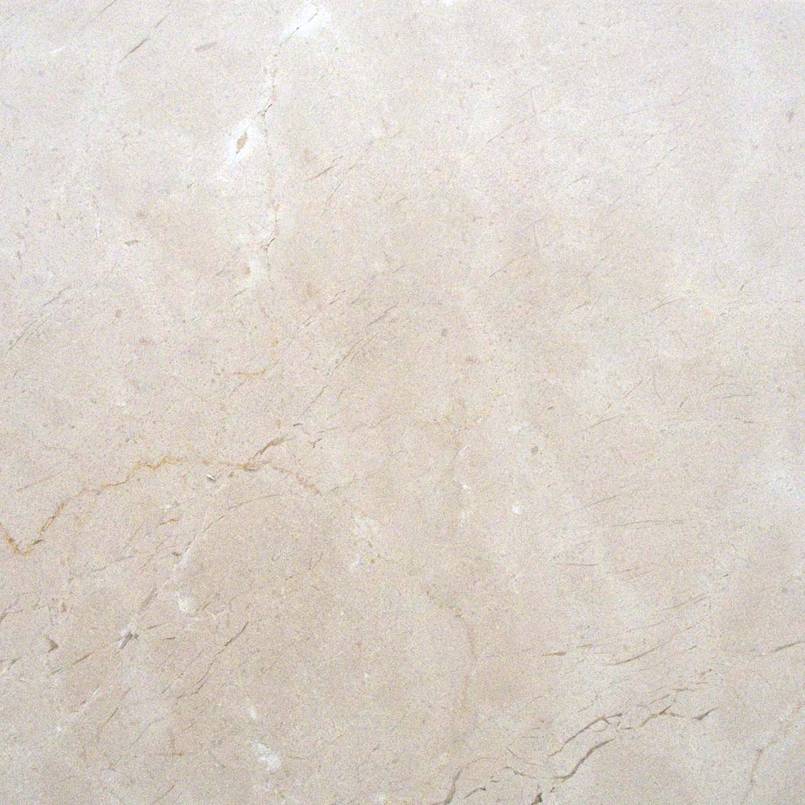
Since the feeling of this house is light, open, and calm, I wanted a counter material that would have very minimal movement in terms of a pattern so as not to compete with the texture of the backsplash. My clients prefer natural stone and one of the prettiest out there is Crema Marfil. This stone is a marble, and while I generally try to steer clients away from using marble in a kitchen setting as it can etch from acidic foods like vinegar and lemons, Crema Marfil is a little heartier. If properly sealed, and if you are the type of cook who cleans up as you go, then this marble could be for you. The cream color has beautiful clouds of tan and warm grey, making it a soft visual statement.
But choosing the type of material is only half the story. When buying slabs for a kitchen, I always like to bring clients to the marble and stone slab showroom so we can choose the exact slabs we want. Stone is a natural material and variation in color and pattern is an inevitability. So it is wise to have the slab warehouse open up what is called the "packet" (the bundle of stone slabs in their order of how they were mined from the quarry) for your inspection. After all, the sample you saw might be from a packet or bundle that was quarried years ago and the material being quarried now might not look the same in terms of color or veining.
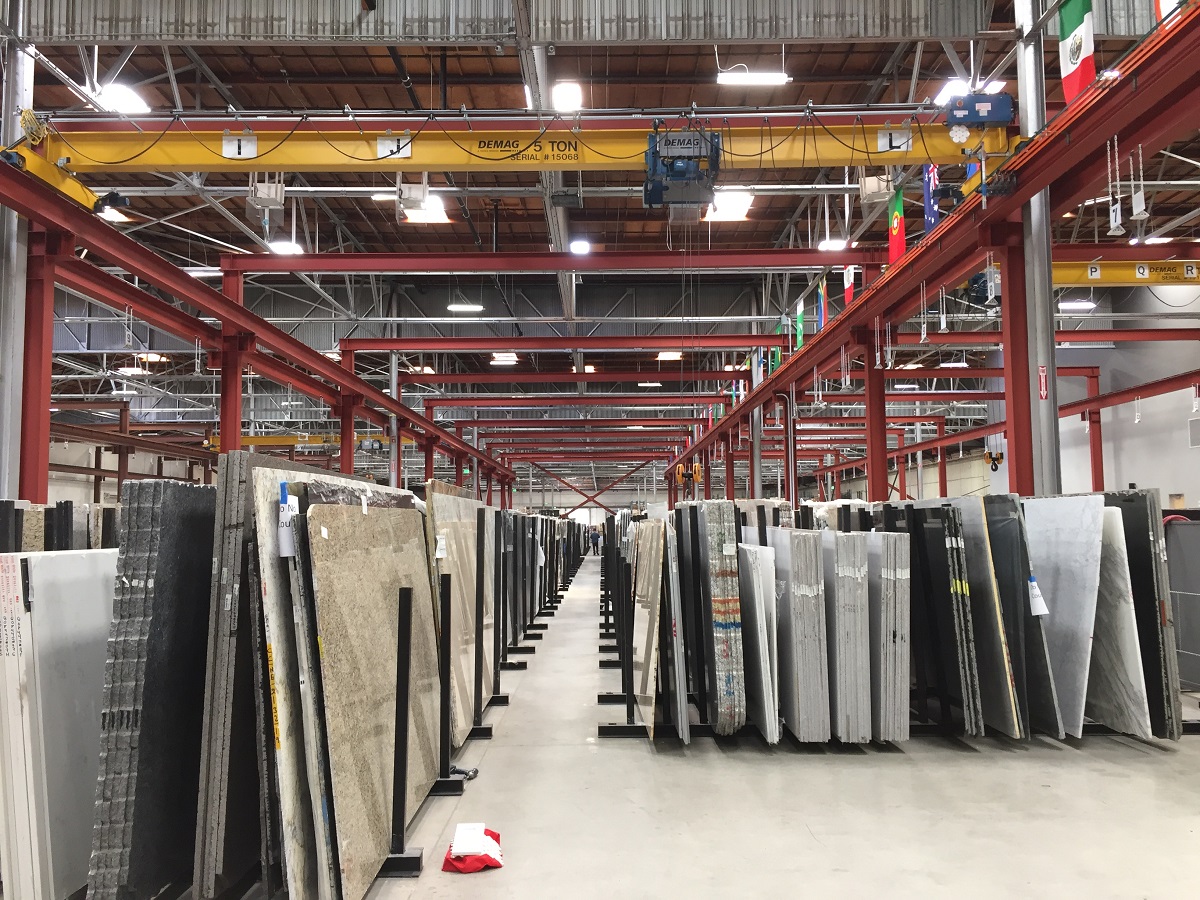
My client and I went to the slab warehouse where they used a special mechanized crane to lift and lay out seven slabs for us to review. Only three are needed for the kitchen so we had a nice selection to choose from. Below you can see the rows and rows of slabs under the movable crane that travels up and down the aisles.
It's a delicate and dangerous operation as these slabs can weight upwards of 800 or 900 pounds each.
And here are the slabs, in sequence of how they appear in the packet, laid out for us to inspect.
After we chose three slabs, they were shipped to the fabricator for a template review. Larger marble and stone warehouses often only sell the material and do not act as fabricators (the ones who will cut the slabs up into counter shapes with properly sized holes for sinks and faucets, etc.). In this case, the fabricator is nearby so transport was relatively simple. If you choose your slabs from the fabricator, this step will obviously be eliminated.
Here are photos of the templates on our chosen slabs. A template is a pattern that is made by the fabricator of the exact dimensions and shapes of the counter top. Sink and faucet holes are cut on site to guarantee precision.
These are just a few of the many thousands of steps and decisions involved in a kitchen remodel. If you're thinking of a new kitchen but feel overwhelmed with the prospect, give me a call. I'm happy to guide you through it all to the kitchen of your dreams.
Happy designing!
Since the feeling of this house is light, open, and calm, I wanted a counter material that would have very minimal movement in terms of a pattern so as not to compete with the texture of the backsplash. My clients prefer natural stone and one of the prettiest out there is Crema Marfil. This stone is a marble, and while I generally try to steer clients away from using marble in a kitchen setting as it can etch from acidic foods like vinegar and lemons, Crema Marfil is a little heartier. If properly sealed, and if you are the type of cook who cleans up as you go, then this marble could be for you. The cream color has beautiful clouds of tan and warm grey, making it a soft visual statement.
But choosing the type of material is only half the story. When buying slabs for a kitchen, I always like to bring clients to the marble and stone slab showroom so we can choose the exact slabs we want. Stone is a natural material and variation in color and pattern is an inevitability. So it is wise to have the slab warehouse open up what is called the "packet" (the bundle of stone slabs in their order of how they were mined from the quarry) for your inspection. After all, the sample you saw might be from a packet or bundle that was quarried years ago and the material being quarried now might not look the same in terms of color or veining.
My client and I went to the slab warehouse where they used a special mechanized crane to lift and lay out seven slabs for us to review. Only three are needed for the kitchen so we had a nice selection to choose from. Below you can see the rows and rows of slabs under the movable crane that travels up and down the aisles.
It's a delicate and dangerous operation as these slabs can weight upwards of 800 or 900 pounds each.
And here are the slabs, in sequence of how they appear in the packet, laid out for us to inspect.
After we chose three slabs, they were shipped to the fabricator for a template review. Larger marble and stone warehouses often only sell the material and do not act as fabricators (the ones who will cut the slabs up into counter shapes with properly sized holes for sinks and faucets, etc.). In this case, the fabricator is nearby so transport was relatively simple. If you choose your slabs from the fabricator, this step will obviously be eliminated.
Here are photos of the templates on our chosen slabs. A template is a pattern that is made by the fabricator of the exact dimensions and shapes of the counter top. Sink and faucet holes are cut on site to guarantee precision.
These are just a few of the many thousands of steps and decisions involved in a kitchen remodel. If you're thinking of a new kitchen but feel overwhelmed with the prospect, give me a call. I'm happy to guide you through it all to the kitchen of your dreams.
Happy designing!
Subscribe to:
Posts (Atom)