Monday, May 23, 2022

Legends of Design: Syrie Maugham

In this installation of Legends of Design, we are traveling back to one of the earlier pioneers of what we know today as the profession--and concept of--of interior design.

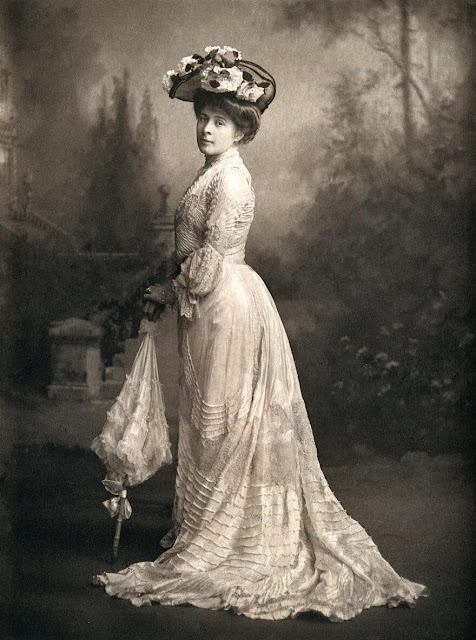
Gwendoline Syrie Maud Wellcome (née Barnardo), Syrie Maugham. Photograph by Lafayette Ltd.

Born in London in July 1879 as Gwendoline Maud Syrie Barnardo, our current legendary Designer was not only a pioneering designer but also a pioneering proto-feminist. She bucked a very strict, religious, oppressive upbringing to study as an apprentice under Ernest Thornton-Smith at a London decorating firm. Keep in mind that she was going against not only her family but also society as women of a certain standing in the 1910s did not work. For perspective, they could not yet vote. So for Gwendoline (Syrie) to light out on her own was something that surely took courage and stamina. But it wasn't until she was 42 years old, in 1922, that she truly took the leap and opened up her own business with a loan of £400. Her London business quickly flourished and her clientele included celebrities like Noel Coward, the Duke and Duchess of Windsor, fashion designer Elsa Schiaparelli, and the poet Stephen Tennant. She took on projects in California, a move that brought her to the United States (to work with clients like Hollywood starlet Jean Harlow), and the subsequent opening of outposts in New York and Chicago.

And during all of this, she married Henry Wellcome, an American-born British industrialist who had made his fortune in pharmaceuticals, giving birth to their son Henry Mounteney Wellcome, having affairs with various lovers including the department store magnate Harry Gordon Selfridge, Brig. Gen. Percy Desmond Fitzgerald, and eventually the novelist William Somerset Maugham. While still married to Wellcome, she gave birth to a daughter with Maugham, Mary Elizabeth Maugham. She divorced Wellcome and married Maugham in 1917 but that ended in divorce as well in 1928.

So why is she a Legend of Design you might ask? Well, in between marriages and affairs and divorces, she championed the very radical idea of an all-white room, creating many for clients over the years, but her most famous all-white room was her own drawing room at 213 King's Road, London, which she unveiled at a midnight party in 1927. Walls lined with slivers of mirror reflected all white sofas, white rugs, white tables, and vases of lilies.


Maugham's perspective exerted great influence on the world of interiors...remember the world was coming out of a period of dark walls, massive tasseled and swagged drapery obscuring sunlight at every window, and heavy carved wooden furniture upholstered in crimson velvet. Her idea of all-white or monotonal rooms, or her salon in her villa at Le Touquet in France which featured an all-ecru palette punctuated with pale pink curtains, was absolutely radical. This penchant for light, bright, monotone rooms can be seen in set designs for many Hollywood films of the 30s in which a starlet, perhaps Jean Harlow, is seen in a white satin and fur boudoir.

She also took a vastly different approach to antique furniture. She removed the precious category surrounding antique pieces and stripped them of paint and stain, choosing instead to "pickle" (bleach) the wood or paint it robin's egg blue, vert Francaise, or the highly controversial white, all with a crackle glaze finish! She even dared to use modern fabric on pieces like a Louis XVI settee. In this and in many ways, she was indeed a woman ahead of her time.

Karl Lagerfeld was inspired by Maugham's all-white room for his Spring-Summer 2017 Chanel collection shown, comme d'habitude, at the Grand Palais in Paris. Look at the slivers of mirror, the white sofas for the audience and the plinths of calla lilies!


Happy designing!

Monday, May 9, 2022

8 New Colors of Neolith

Neolith, the company that makes sintered stone products, has unveiled eight new models in their New Classtone Series, available exclusively in North America. Dedicated to sustainability, this product is all natural and 100% recyclable. Available in 1/4", 1/2" and 3/4" thicknesses, the New Classtone Series is also lightweight, waterproof, scratch resistant, easy to clean, bend resistant, and UV and high traffic resistant. But most impressive of all is the fact that the material is embedded with neoLEAT, a technology developed by neolith R&D&I. This technology makes the material ultra-hygienic by preventing the spread of bacteria such as listeria, monocytogenes and salmonella. Of course it does not have to be used only on kitchen counters or islands or in bathrooms...it can be used for flooring or wall cladding in any room!

Alexandra is a lovely soft veined material in cool greys and whites.


The Arabesque model features stronger, lace-like veining...


Calcatta Royale has medium veining in what appears to be warmer greige tone.


The Calista model is reminiscent of Silver Travertine with its gentle striations.


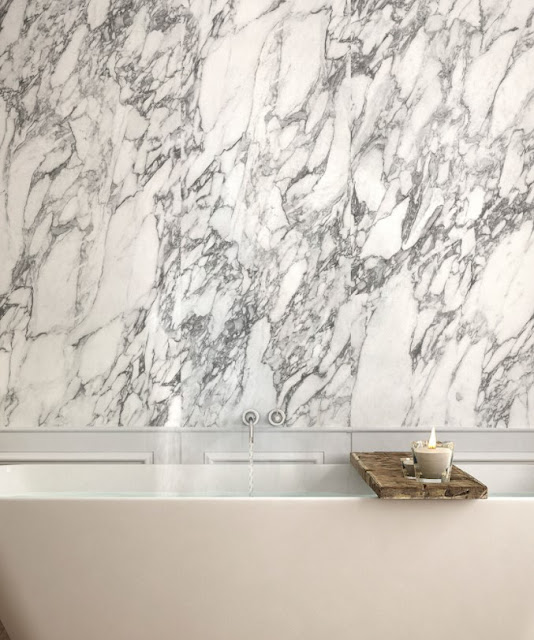
The Colorado Dunes model features grey and black geometric veining shot through with occasional traces of gold which recalls the jaggedness of the Rockies.


Niagara is a beautiful, dramatic black product that mimics Nero Marquino marble.


And finally, Whitehaven features an irregular pattern recalling cut geodes.


Happy designing!

Monday, April 25, 2022

Know Your Chairs: The Throne Chair by Carlo Bugatti

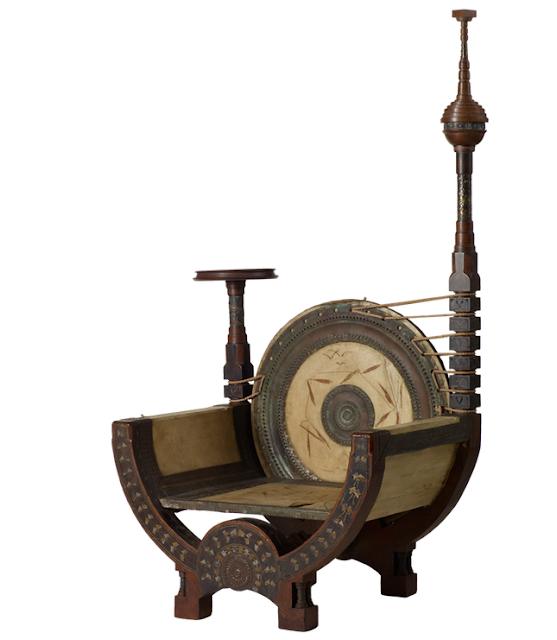
For this continuing series of Know Your Chairs, I want to share a very special creation. Known as The Throne Chair, this incredible--and incredibly rare--piece of furniture was designed by Carlo Bugatti.


If his name sounds familiar, his son Ettore went on to create the esteemed Bugatti automobile, and other son Rembrandt Bugatti became a renowned sculptor. Carlo was born in 1856 in Milan which, at that time, was not part of Italy but part of the Kingdom of Lombardy (the Kingdom officially became part of Italy in 1866). He studied both at the Brera Academy in Milan and the legendary Académie des Beaux Arts in Paris. Starting in 1880, he began to manufacture furniture, working in Milan and Paris. And around the turn of the century he seemed to hit his stride, creating stunning, one-of-a-kind pieces. But nothing quite beats his Throne Chair.


The asymmetrical Throne Chair feels a little Moroccan, West African, maybe Mongolian, with a bit of Egyptian thrown in, perhaps a little Gothic as well, all seen through an Art Nouveau lens. It was, after all, created smack dab in the middle of the Art Nouveau movement in Europe during which a fascination with all things "Orientalist" blossomed. This trend covered any area that was considered "exotic" to Western Europe like Egypt, Turkey, all the way to Japan. And the Throne Chair includes materials and craftsmanship that represent those areas: wood inlaid with bone and metal, copper, rope...and the round shield seat back features a painted vellum insert on brass.

Of course there is no current Bugatti furniture studio, no one "holds the rights" to any of his pieces. We only have what reamins of his creations. Bugatti himself kept no production records so it is impossible to tell how many pieces he created, much less how many Throne Chairs exist. Some estimates put his creations at less than 1,000 pieces of furniture in total, if that. In fact, a Bugatti Throne Chair last sold at auction for $30,000 several years ago...and I suspect the next time it comes up, it will sell for much more than that.

Happy designing!

Monday, April 11, 2022

Fiorito Interior Design Press Update, March 2022

I am proud to share that Fiorito Interior Design was featured on Houzz in an article by interiors journalist Jo Simmons entitled "Small Indulgences to Enhance Everyday Life." A photo of the English-French Manor House-Style kitchen I recently posted here is mentioned under a category extolling the pleasure of having fresh cut flowers in one's home. The yellow tulips in the blue and white kitchen certainly bring a bright delight to the space.


Thanks Houzz and Jo for featuring my work.
Photo by Bernardo Grijalva.

Happy designing!

Monday, March 28, 2022

An English-French Manor-Style Remodel by Fiorito Interior Design

It is sometimes a surprise what beauty can lurk under the surface of a room. A client with a 1970s kitchen and eat-in area cut up by an unwieldy peninsula was desperate for it to reflect her love of all things English-and-French-Manor-Home.

Working closely with my client, we removed the peninsula in favor of a lovely free-standing island that we painted a shade of French Blue. This is topped with Old World sink hardware (note the ceramic HOT and COLD medallions on the faucets!) and a gorgeous marble counter with a very special edge profile that evokes an antique French Boulangerie counter from the 1910s. Pendants with patinaed metal shades over the island further the charming Old World feel. Handmade white and blue tiles laid in a quilted diamond pattern cover the backsplash, and the remainder of the cabinetry at the perimeter is in a warm cream tone.

The eat-in area near the fireplace got a cozy treatment with custom seat cushions and window seat bench cushions in a classic blue-and-white Toile de Jouy matching the island stools.

The nearby living room got a similar treatment. We removed dark wood paneling and dark carpeting in favor of a light sky blue wall and lighter wood flooring. A new rug with the appearance of an heirloom, a new grand-scaled sofa, and some of my client’s precious antiques helped take the room from 70s rec room to English Sitting Room.


All photos by Bernardo Grijalva.

Happy designing!

Monday, March 14, 2022

Know Your Sofas: The Camaleonda Sofa

Let's face it, there were a ton of super-cool sofas designed and manufactured by super-cool furniture designers in the 1960s and 1970s. The Togo sofa by Michel Ducaroy (here), the Terrazza sofa by de Sede and Ubald Klug (here), the Élysée Sofa by Pierre Paulin (here), and the Serpentine sofa by Vladimir Kagan (here). And to this illustrious list in our series Know Your Sofas, I am delighted to add the equally super-cool Camaleonda sofa by Mario Bellini.


Born in 1935, Mario Bellini's amazingly varied and prolific design career started in 1963. Among many other thihngs he was, and you might want to sit down for this, chief product designer at Olvetti from 1963 to 1991, designed furnishings for B&B Italia and Cassina and Natuzzi, hi-fi systems, headphones and electric organs for Yamaha, lamps for Artemide, Erco and Flos, office furniture for Vitra, and was an auto deisgn consultant for Renault. And he has twenty-five of his designs in the permanent design collection of the New York MoMA. Wow. As of this writing, Bellini is 87 and still designing at his studio Mario Bellini Architects.

But back to his Camaleonda sofa...designed for B&B Italia in 1970.  In a 2020 interview with Architectural Digest, Bellini said, "I crossed two words: camaleonte, or chameleon, an extraordinary animal capable of adapting to its environment, and onda, or wave." This portmanteau is a perfect word for modular seating that can be arranged in many different ways to suit a specific room or environment. Here it is in an original B&B Italia advertisement in 1971.

Photo: Bruno Falchi and Liderno Salvador

The sofa is held together with an ingenious system of cables and hooks. And I love how the upholstery ends up looking like it is draped rather than tightly tacked down.


Here it is in the Malibu home of Beastie Boy Mike D. 

Photo by Trevor Tondro

And here it is in the amazing Brooklyn townhouse of Athena Calderone as featured in architectural Digest in 2018.

Photo by Gieves Anderson

Although the sofa went out of production in 1979 and originals auction off for more than a pretty penny, B&B Italia, the original manufacturers, have brought it back, now featuring recycled and recyclable materials.


Happy designing!

Monday, February 28, 2022

History of Furniture: The Conversation Pit

For this installment, let's look at something that is not so much an actual piece of individual furniture as much as it is a structure: The Conversation Pit.

Although sunken seating has roots far back in history, particularly in Asian countries, interior design lore suggests that the first real conversation pit as we know it today was created by Bruce Goff, an American architect, for a home he designed in 1927. Conversation pits became something of a signature in his home designs but it wasn't until the 1950s that the idea caught fire and spread, showing up in the 60s, 70s, even into the 80s!

Perhaps one of the best known examples of a conversation pit is in the Miller House, the mid-century masterpiece designed by Eero Saarinen with interiors by the incomparable Alexander Girard. It was Girard who suggested the conversation pit so as not to clutter the space with furniture pieces that would have impeded the view and interrupted the lines of Saarinen's architecture.


Another spectacular example of a conversation pit, on a grand scale, is another Saarinen design: the TWA Terminal at JFK which is now the fabulously retro TWA Hotel!


Conversation pits could be found in ordinary residential designs as well!


Eventually, like any element from pretty much any era, conversation pits started to look dated and fell out of favor. But word is they are making a comeback in interior architecture and design. Here is a current, superb example by architect Craig Steely who embedded a marvelous sunken pit into the concrete foundation of a home in the hills of the Santa Cruz Mountains. Steely says the pit "is filled with 144 sq. ft. of B&B Italia’s 'Tufty time' sofa components." In deep purple. Delightful.


Happy designing!