When I am designing a kitchen or bathroom for a client, they are usually surprised at how many decisions are involved, sometimes small ones they never dreamed of. So many details are hiding around every bend in the remodel road, and one of the things that most people have never had to notice or think about is the style of cabinetry they want. Sure, people know they want something simple and modern, or something ornate and traditional. But there is a level beyond that we always need to explore.
The most popular door and drawer styles now are called "inset" and "full overlay."
An inset door and drawer is one that is, as the name suggests, inset into the frame of the cabinet. The front of the door or drawer is flush with the face of the cabinet, as you can see below in a recent kitchen I did for a client (previously
here). The result is a sleeker, cleaner look even while using traditional Shaker doors as illustrated here.
 |
| Photo by Rick Pharoah |
 |
| Photo by Rick Pharoah |
 |
| Photo by Rick Pharoah |
 |
| Photo by Rick Pharoah |
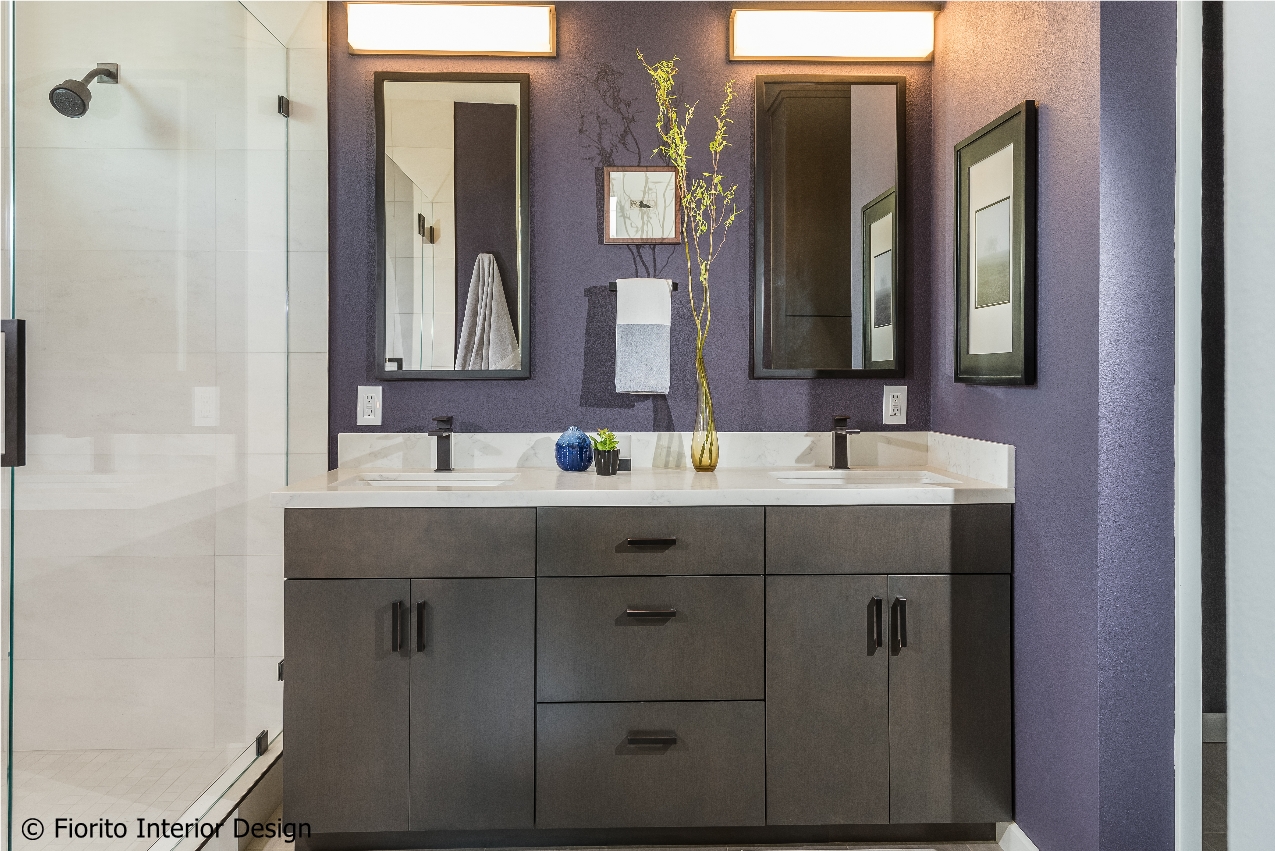
This inset style is currently very popular, but every now and then I hear feedback from a client who thinks the look seems a little busy. They don't like being able to see not only the lines around the door or drawer but then also the face which they perceive as making more visual lines. In this case, I recommend the full overlay door style. This is where all the doors and drawers meet, so one cannot see the face frame of the cabinet at all. This style looks great with more modern slab front doors and drawers. I designed two bathrooms, seen below, that show this off beautifully.
The warm wood of the Walk In The Forest bathroom, previously
here, adds a beautifully organic feeling to the minimalist slab doors and drawers, allowing the horizontal wood grain to become the feature. The full overlay doors and drawers here make the vanity feel neat and composed.
 |
| Photo by Genia Barnes |
 |
| Photo by Genia Barnes |
 |
| Photo by Genia Barnes |
The next bathroom, which I called Dramatic (see it
here) because of the deep plum wall, features a vanity with full overlay doors and drawers.
 |
| Photo by Bernardo Grijalva |
 |
| Photo by Bernardo Grijalva |
 |
| Photo by Bernardo Grijalva |
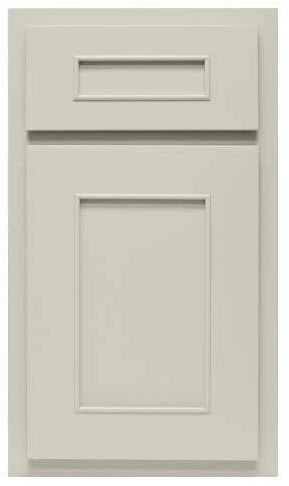
But you don't have to use slab doors to achieve a nice effect with full overlay doors. A more traditional door profile, as seen below in the Light and Airy Kitchen,
here, I designed for some clients, shows this off nicely. A Shaker door modified with a slender bead looks wonderful in this configuration.
 |
| Photo by Bernardo Grijalva |
 |
| Photo by Bernardo Grijalva |
 |
| Photo by Bernardo Grijalva |
The third option is one that most people now avoid because it gives your newly remodeled space a dated appearance. The "standard" or "partial overlay" is one where the doors and drawers are neither inset into the cabinet box nor do they meet to hide the face of the box...they are just small enough to allow about a half inch of the frame to be seen. This is called the "reveal" and to my eye is not only dated but also has the look of a piece of cabinetry from a big box store...and such pieces tend to be poorly made. Not to put too fine a point on it, but standard or partial overlay doors and drawers make the piece of cabinetry look like the least expensive thing a landlord could buy to put into a rental unit. If you stick with full overlay or inset doors and drawers, you will have a space that looks well designed.
Happy designing!