Showing posts with label slab. Show all posts

Monday, March 9, 2026

The Holy Trinity of White Marbles: Carrara, Calacatta, and Statuario

When selecting white marble for interiors, the standout marbles are certainly Carrara, Calacatta, and Statuario. While they all come from the storied quarries of the Apuan Alps in the Carrara region of Tuscany, each type of marble has a distinct personality — and choosing the right one can have a major impact on both aesthetics and budget.

First, Carrara marble is perhaps the most familiar and accessible of the three. Quarried from the vast network of marble sites around Carrara, it often carries a soft white to pale-gray background with delicate, feathery gray veining. Its more muted pattern gives it an understated elegance, making it a favorite for large surfaces like flooring or classic bathroom vanities. Because Carrara is quarried in relatively large quantities, it is also the most budget-friendly option: depending on grade and supplier, material prices (without installation) often range from around $40–$80 per square foot, though higher-end slabs can go up to or even beyond $120.


In contrast, Calacatta marble is the flamboyant, statement-making cousin. Also coming from the Carrara region, but from rarer, more exclusive quarry zones, Calacatta features a much brighter, whiter background and large, bold veins in grey, gold or even beige (called Calacatta Oro). That dramatic veining makes Calacatta highly prized for high-impact design: think kitchen islands, fireplace surrounds, or feature walls. But that rarity comes at a cost. True, Italian Calacatta slabs typically run from $175–$200 or more per square foot even for the raw material, per current market estimates.


Then there’s Statuario marble, which occupies a special place in the pantheon of luxurious Italian stone. Extracted from quarries in the Apuan Alps (especially near Seravezza), Statuario is prized for its luminous, near-pure white base and its fine, yet striking, grey veining — sometimes referred to as “venato” when the veins are bolder. This marble has traditionally been used for statuary (hence its name) because of its fine crystal structure and ability to take a high polish. Because of its relative rarity and the beauty of its veining, Statuario tends to fall in a high-end price bracket: common slab prices are often cited in the $50–$125 per square foot range, though premium or particularly rare varieties may go higher.


From a maintenance perspective, all three marbles demand care. Like all marbles, they are porous, and vulnerable to etching from acidic substances, so sealing is non-negotiable. For both Carrara and Calacatta, stone fabricators generally recommend resealing every six to twelve months, especially in heavily used areas like kitchens. Cleaning should be done with a pH-neutral stone cleaner or mild soap and water; avoid any abrasive or acidic cleaners. For Statuario, the same rules apply — but many over time prefer to use honed rather than polished finishes, as the matte surface can mask wear and etching more gracefully while still delivering its signature refined look.

In short: Carrara is your elegant workhorse — versatile, soft, and relatively affordable. Calacatta is for the design risk-takers, those who want drama and a bold focal point. Statuario offers a rare balance of purity and sophistication, combining a crisp white ground with refined veining in a way that feels quietly luxurious. Your choice will ultimately depend on your design goals, your budget, and how much maintenance you’re willing to commit to. I had a client assure me that she was fine with marble in the kitchen and looked forward to having that "lived-in, cooked-in" look that tells a story about the people and the meals that happened there. But her romantic story of marble countertops turned to reality when she had m e over for dinner a year later and said, "Look at all the rings on the counter!" So understanding these subtle differences not only visually but also how you plan to use and live with the material is the first step to making a stone choice that truly elevates your space.

Happy designing!

Monday, August 21, 2017

Slab and Template: Together Forever

I am currently working on a whole-house remodel for a client and we are in the kitchen phase. After we picked out our color scheme for the cabinets, counter, and backsplash, we set about choosing materials. I found a gorgeous backsplash made out of crosshatch pieces of light cream marble punctuated with decorative squares of variegated Dream Stone.


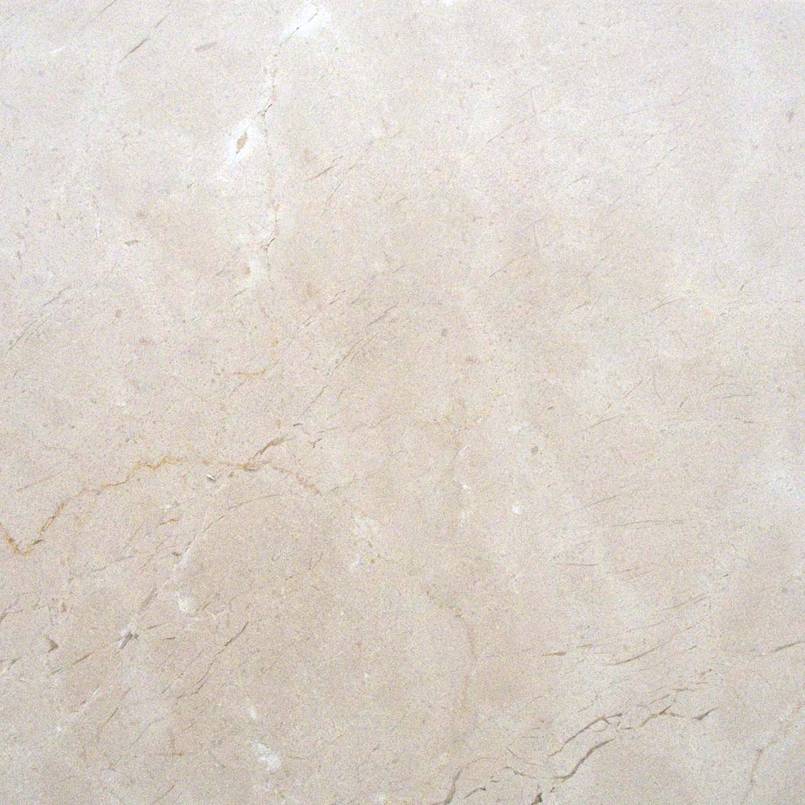
Since the feeling of this house is light, open, and calm, I wanted a counter material that would have very minimal movement in terms of a pattern so as not to compete with the texture of the backsplash. My clients prefer natural stone and one of the prettiest out there is Crema Marfil. This stone is a marble, and while I generally try to steer clients away from using marble in a kitchen setting as it can etch from acidic foods like vinegar and lemons, Crema Marfil is a little heartier. If properly sealed, and if you are the type of cook who cleans up as you go, then this marble could be for you. The cream color has beautiful clouds of tan and warm grey, making it a soft visual statement.


But choosing the type of material is only half the story. When buying slabs for a kitchen, I always like to bring clients to the marble and stone slab showroom so we can choose the exact slabs we want. Stone is a natural material and variation in color and pattern is an inevitability. So it is wise to have the slab warehouse open up what is called the "packet" (the bundle of stone slabs in their order of how they were mined from the quarry) for your inspection. After all, the sample you saw might be from a packet or bundle that was quarried years ago and the material being quarried now might not look the same in terms of color or veining.

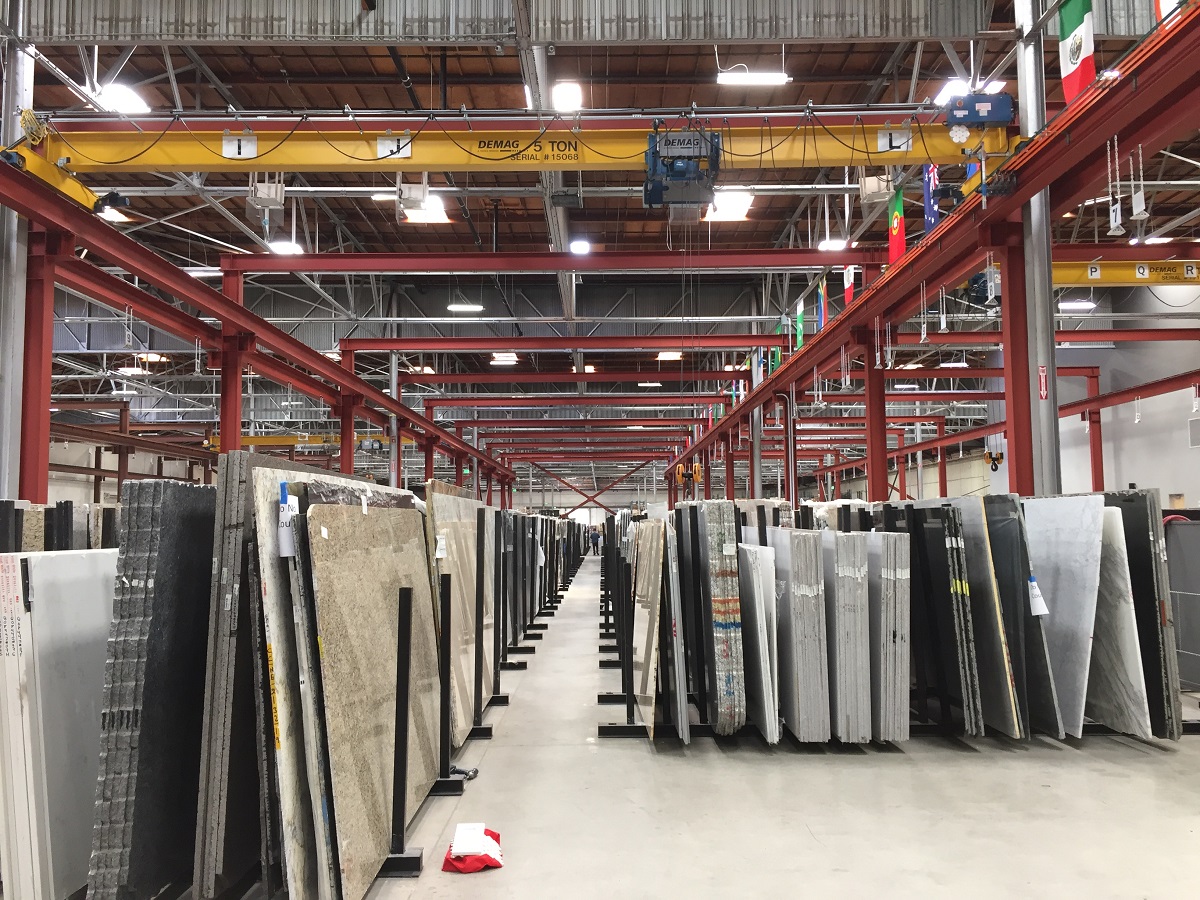
My client and I went to the slab warehouse where they used a special mechanized crane to lift and lay out seven slabs for us to review. Only three are needed for the kitchen so we had a nice selection to choose from. Below you can see the rows and rows of slabs under the movable crane that travels up and down the aisles.


It's a delicate and dangerous operation as these slabs can weight upwards of 800 or 900 pounds each.


And here are the slabs, in sequence of how they appear in the packet, laid out for us to inspect.


After we chose three slabs, they were shipped to the fabricator for a template review. Larger marble and stone warehouses often only sell the material and do not act as fabricators (the ones who will cut the slabs up into counter shapes with properly sized holes for sinks and faucets, etc.). In this case, the fabricator is nearby so transport was relatively simple. If you choose your slabs from the fabricator, this step will obviously be eliminated.

Here are photos of the templates on our chosen slabs. A template is a pattern that is made by the fabricator of the exact dimensions and shapes of the counter top. Sink and faucet holes are cut on site to guarantee precision.


These are just a few of the many thousands of steps and decisions involved in a kitchen remodel. If you're thinking of a new kitchen but feel overwhelmed with the prospect, give me a call. I'm happy to guide you through it all to the kitchen of your dreams.

Happy designing!