Monday, June 20, 2022

History of Furniture: Arts and Crafts

As is so often the case with particular historical developments in art, interiors, clothing, even politics, a movement is usually a reaction to and against something that came immediately before it. Periods of excess lead to periods of austerity and vice versa, whether we are speaking of architecture, furniture, painting, sculpture, dance, or even literature. Such is the case with our next story in our History of Furniture series.

Formed in the late Victorian period (previously here), the movement known as Arts and Crafts came into being as a way to protest the new, and to some the menacing, Industrial Revolution. Roughly between 1880 and 1920, there arose a mistrust and dislike of machine-manufactured furniture and home goods. These objects were seen as too ornate simply for its own sake, soulless, tasteless, and removing humans from the natural world. There were dozens of high profile designers and architects, several of whom I will mention here, but they all felt what was lacking in the modern machine age was the touch of the craftsman, a sense of an object being made by hand out of an organic material like wood and stone.
It is understandable that the movement originated in Great Britain, the first part of the world to really see the proliferation of the Industrial Revolution. Major proponents of this movement include William Morris and Charles Rennie Mackintosh.

William Morris' Wiki entry exhaustively lists him as a "textile designer, poet, artist, novelist, architectural conservationist, printer, translator and socialist activist" and while all of that is true, he is most remembered for his textile and wallcovering designs. Influenced by the flat presentation of Japanese wood block prints and featuring natural, organic motifs, many of these original wallcoverings and fabrics are currently in production through Morris & Co. owned by the Sanderson Group.

William Morris, age 53

Compatriot and fellow Arts and Crafts figure Charles Rennie Mackintosh, previously here in a Famous Homes post, created his own visual vernacular with his wife, the artist Margaret Macdonald Mackintosh. Also inspired by Japanese wood blocks and the honesty of handmade crafts, Mackintosh worked with even simpler shapes and forms that look more like cloisonné. Look at these rose designs made for the Mackintosh's masterpiece, Hill House, created for publishing magnate Walter Blackie in Helensburg, Scotland.

Charles Rennie Mackintosh

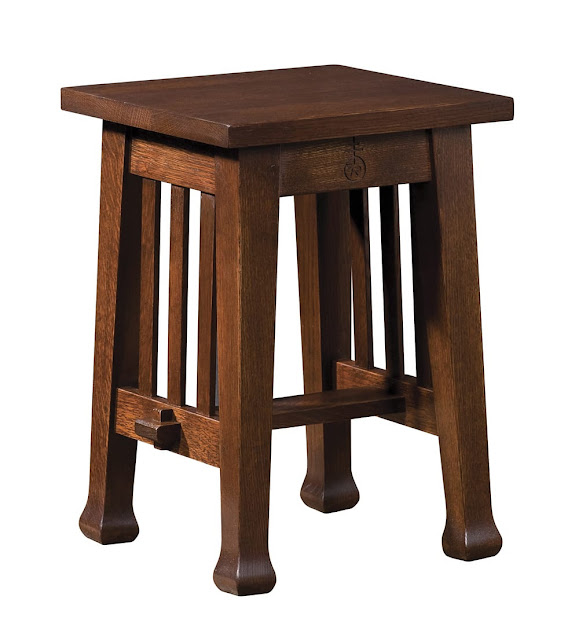
It took a little while but Arts and Crafts eventually made its way to North America and held sway from roughly 1910 to 1925 or so. There were many different Arts and Crafts societies that sprang up around the United States, all dedicated to simplicity of form and design along with integrity of construction. Major figures included Gustav Stickley who made furniture that featured mortise and tenon construction reminiscent of traditional Japanese joinery, and Elbert Hubbard who created the Roycroft community of craftsmen in upstate New York. These legendary brands are again in production and can be purchased through Stickley.com. This style of furniture is often referred to as Mission Style but in actuality, Stickley rejected that name, claiming it to be misleading. The name refers to the Spanish missions of California and can be traced back to a very simple, chunky, near-Shaker chair made by A.J. Forbes around 1894 for San Francisco's Swedenborgian Church. New York furniture manufacturer and retailer Joseph P. McHugh copied these chairs and created a coordinating line of  furnishings which resembled the pieces coming from the Arts and Crafts movement at the time. Thus the term Mission was born.


On the West Coast, Arts and Crafts manifested with the work of architects Julia Morgan and brothers Greene and Greene as American Craftsman (an offshoot of this is Frank Lloyd Wright's Prairie Style which we will examine in a future post of History of Furniture, as it deserves its own section). They each created buildings and interiors that changed the way people lived. Indeed, Greene and Greene's contributions led to the evolution of what is still referred to as the California Bungalow style which is seen everywhere in cities like Berkeley, Venice, and Pasadena. 

Julia Morgan, St. John’s Presbyterian Church, Berkeley, Calif., 1908–16.
Julia Morgan Collection, Environmental Design Archives, University of California, Berkeley

Greene and Greene's masterpiece is the Gamble House in Pasadena, California. Built for David B. Gamble, son of the Procter & Gamble founder James Gamble, the home is a National Historic Landmark, a California Historical Landmark, and open to the public for tours and events. Tour tickets can be purchased at Gamblehouse.org.


There was also a great interest in pottery and metal work in the Arts and Crafts movement, as evidenced by the iconic mica-shade copper lamp, and many pottery companies like Grueby, Newcomb College, Rookwood, Roseville, and Weller.


Happy designing!

Monday, June 6, 2022

New Ravenna + Gracie = Gorgeousness

I just came across a collaboration between Exmore, Va.-based mosaic tile manufacturer New Ravenna and venerable wallcovering manufacturer Gracie (since 1898!). New Ravenna is creating glass mosaic panels based on Gracie wallcovering patterns and the results are amazing. Together, they have created five different offerings, each in two colorways.

Blythedunes, a hand-cut jewel glass mosaic shown in Lapis Lazuli, Iolite, and Covellite, with Sea Glass™ Absolute White, is part of the Gracie collection for New Ravenna.


Here it is shown in jewel Agate, Quartz, Amber, Alexandrite, Tiger’s Eye, Sardonyx, Garnet, Ruby, Carnelian, Covellite, Rhodolite, Olivine, Schist, Tortoise Shell, and Obsidian with Sea Glass™ Tanzanite. It is clearly handmade in bespoke sizes.


The French Deco pattern feels vaguely Asian, shown in jewel Absolute White and honed Dawn Mirror. It is also availabel in a more naturalistic colorway using Peridot with Sea Glass™ Absolute White.


Linda's Garden , named for an ancient frescoed Roman villa Linda Gracie admired on her travels to Italy uses jewel Agate, Amber, Citrine, Peridot, Alexandrite, Jade, Schist, Lavastone, Tourmaline, Labradorite, Zircon, Jasper, Champagne, Opal, and Moonstone with Sea Glass™ Serpentine. A warmer colorway uses Citrine, Quartz, Agate, Amber, Tiger’s Eye, and Tortoise Shell, and Sea Glass™ Ruby.


Wave and Blossom, a pattern that feels even more Deco than the French Deco above, uses some pretty lixe colors and materials: Tortoise Shell, Amber, Tiger’s Eye, Jasper, Obsidian, 24K Gold, Dawn Mirror, Moonstone, Alabaster, Champagne, and Rhodolite with honed 24K Gold. The cooler colorway uses Lavastone, Mica, Pewter, Amber, Champagne, Marcasite, and Opal with Sea Glass™ Absolute White.


Finally, a pattern based on the classic Japanese wave design by Hokusai features  realistic and sepia-toned colorways with Marcasite, Zircon, Mica, Pewter, Opal, and Moonstone with Sea Glass™ Moonstone and Absolute White.


These stunning mosaic panels deserve pride of place in a grand walk-in shower or surrounding a luxurious soaking tub. I can't wait to install one for a client...maybe it could be you?

Happy designing!

Monday, May 23, 2022

Legends of Design: Syrie Maugham

In this installation of Legends of Design, we are traveling back to one of the earlier pioneers of what we know today as the profession--and concept of--of interior design.

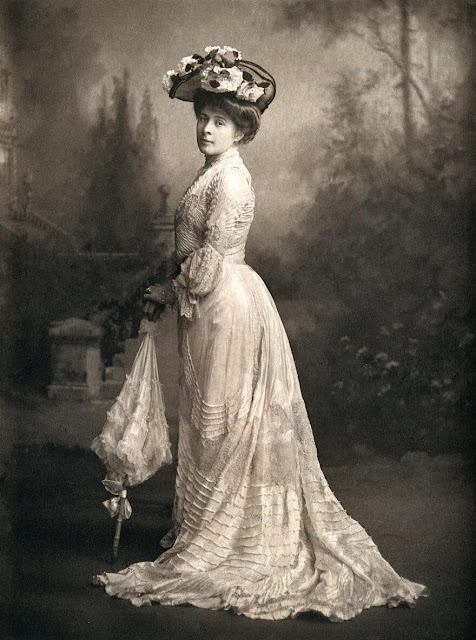
Gwendoline Syrie Maud Wellcome (née Barnardo), Syrie Maugham. Photograph by Lafayette Ltd.

Born in London in July 1879 as Gwendoline Maud Syrie Barnardo, our current legendary Designer was not only a pioneering designer but also a pioneering proto-feminist. She bucked a very strict, religious, oppressive upbringing to study as an apprentice under Ernest Thornton-Smith at a London decorating firm. Keep in mind that she was going against not only her family but also society as women of a certain standing in the 1910s did not work. For perspective, they could not yet vote. So for Gwendoline (Syrie) to light out on her own was something that surely took courage and stamina. But it wasn't until she was 42 years old, in 1922, that she truly took the leap and opened up her own business with a loan of £400. Her London business quickly flourished and her clientele included celebrities like Noel Coward, the Duke and Duchess of Windsor, fashion designer Elsa Schiaparelli, and the poet Stephen Tennant. She took on projects in California, a move that brought her to the United States (to work with clients like Hollywood starlet Jean Harlow), and the subsequent opening of outposts in New York and Chicago.

And during all of this, she married Henry Wellcome, an American-born British industrialist who had made his fortune in pharmaceuticals, giving birth to their son Henry Mounteney Wellcome, having affairs with various lovers including the department store magnate Harry Gordon Selfridge, Brig. Gen. Percy Desmond Fitzgerald, and eventually the novelist William Somerset Maugham. While still married to Wellcome, she gave birth to a daughter with Maugham, Mary Elizabeth Maugham. She divorced Wellcome and married Maugham in 1917 but that ended in divorce as well in 1928.

So why is she a Legend of Design you might ask? Well, in between marriages and affairs and divorces, she championed the very radical idea of an all-white room, creating many for clients over the years, but her most famous all-white room was her own drawing room at 213 King's Road, London, which she unveiled at a midnight party in 1927. Walls lined with slivers of mirror reflected all white sofas, white rugs, white tables, and vases of lilies.


Maugham's perspective exerted great influence on the world of interiors...remember the world was coming out of a period of dark walls, massive tasseled and swagged drapery obscuring sunlight at every window, and heavy carved wooden furniture upholstered in crimson velvet. Her idea of all-white or monotonal rooms, or her salon in her villa at Le Touquet in France which featured an all-ecru palette punctuated with pale pink curtains, was absolutely radical. This penchant for light, bright, monotone rooms can be seen in set designs for many Hollywood films of the 30s in which a starlet, perhaps Jean Harlow, is seen in a white satin and fur boudoir.

She also took a vastly different approach to antique furniture. She removed the precious category surrounding antique pieces and stripped them of paint and stain, choosing instead to "pickle" (bleach) the wood or paint it robin's egg blue, vert Francaise, or the highly controversial white, all with a crackle glaze finish! She even dared to use modern fabric on pieces like a Louis XVI settee. In this and in many ways, she was indeed a woman ahead of her time.

Karl Lagerfeld was inspired by Maugham's all-white room for his Spring-Summer 2017 Chanel collection shown, comme d'habitude, at the Grand Palais in Paris. Look at the slivers of mirror, the white sofas for the audience and the plinths of calla lilies!


Happy designing!

Monday, May 9, 2022

8 New Colors of Neolith

Neolith, the company that makes sintered stone products, has unveiled eight new models in their New Classtone Series, available exclusively in North America. Dedicated to sustainability, this product is all natural and 100% recyclable. Available in 1/4", 1/2" and 3/4" thicknesses, the New Classtone Series is also lightweight, waterproof, scratch resistant, easy to clean, bend resistant, and UV and high traffic resistant. But most impressive of all is the fact that the material is embedded with neoLEAT, a technology developed by neolith R&D&I. This technology makes the material ultra-hygienic by preventing the spread of bacteria such as listeria, monocytogenes and salmonella. Of course it does not have to be used only on kitchen counters or islands or in bathrooms...it can be used for flooring or wall cladding in any room!

Alexandra is a lovely soft veined material in cool greys and whites.


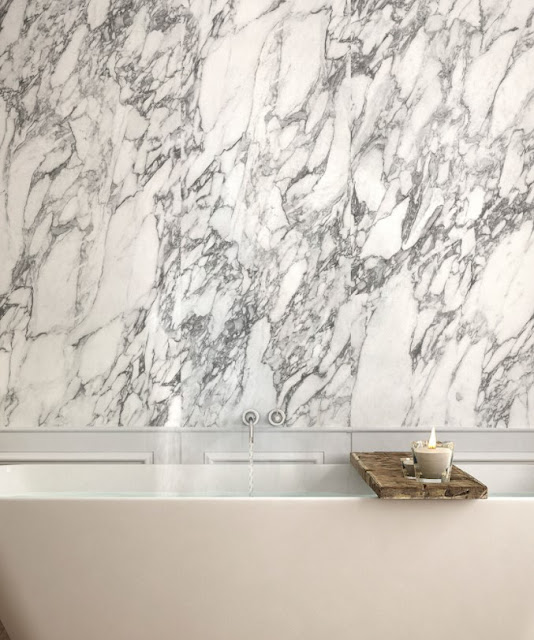
The Arabesque model features stronger, lace-like veining...


Calcatta Royale has medium veining in what appears to be warmer greige tone.


The Calista model is reminiscent of Silver Travertine with its gentle striations.


The Colorado Dunes model features grey and black geometric veining shot through with occasional traces of gold which recalls the jaggedness of the Rockies.


Niagara is a beautiful, dramatic black product that mimics Nero Marquino marble.


And finally, Whitehaven features an irregular pattern recalling cut geodes.


Happy designing!